
Behind the Art with Candy Vermillion
The Choreography Behind the Festival
By Candy Vermillion ·
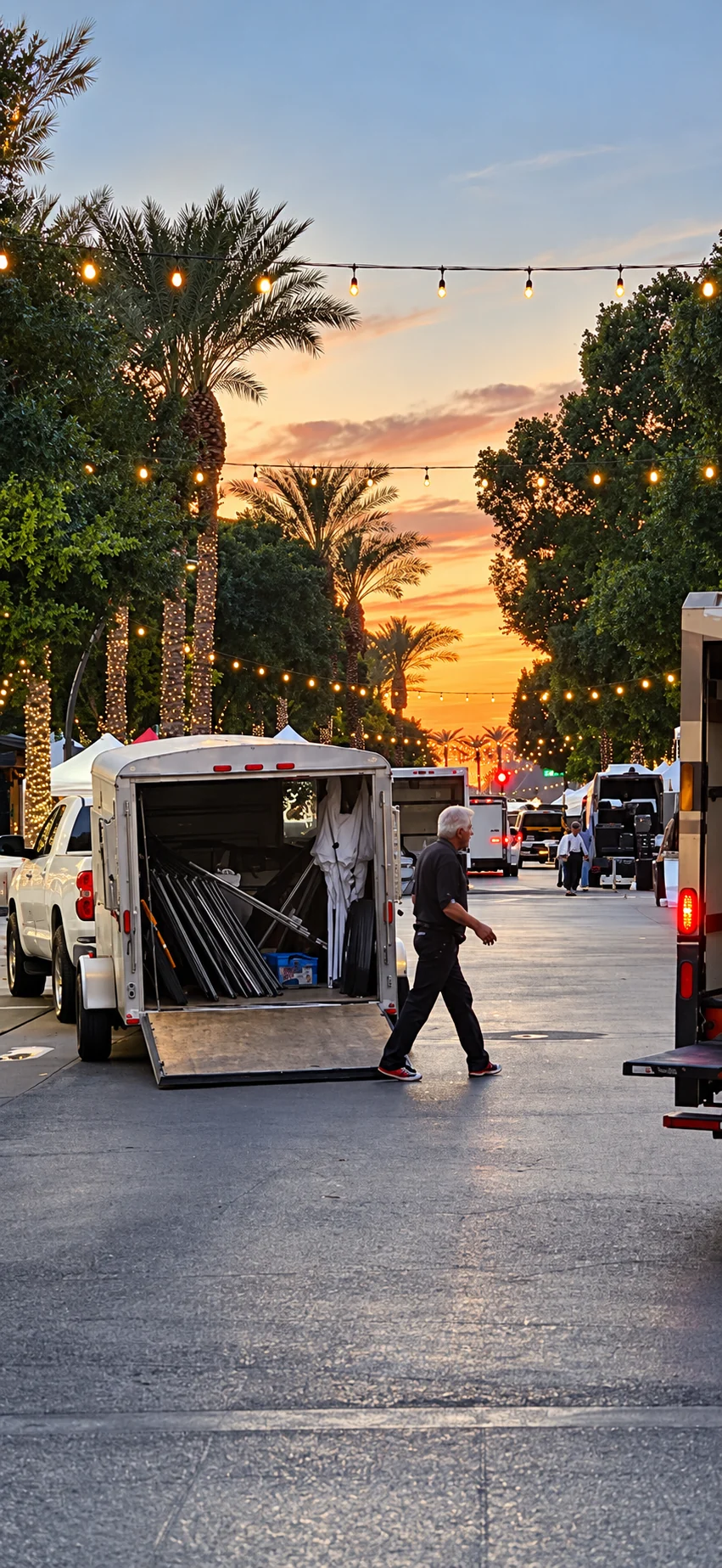
Before the first painting is hung or the first visitor arrives, a festival is already in motion. Vans pull into position, trailers maneuver into unloading areas, and artists begin transforming empty spaces into individual galleries. What will soon become a beautiful setting for art starts with a carefully coordinated arrival.
To someone watching, it might look like everyone is simply finding their booth and setting up. But there is a choreography behind it—one that begins long before artists arrive.
At the Kierland Fine Art & Wine Festival, that preparation means thinking about each artist’s placement, how they will reach their space, where they will unload, and how their arrival will affect the artists around them. It also means considering how all those individual galleries will come together to create a welcoming experience for visitors.
Every placement is a small decision within a much larger picture.
Finding the Right Place for the Art
A festival map might look like a collection of numbered spaces, but assigning those spaces takes time and care. The goal is to create an attractive, balanced show while giving each artist a setting that supports their work.
Medium is one consideration. Paintings, glass, sculpture, photography, jewelry, and other art forms have different display needs. We consider the mix along each section of the festival, looking for variety and visual interest while being thoughtful about placing similar work near one another.
The direction a booth faces matters, too. Sunlight can illuminate a piece beautifully, create glare, or make a display more challenging to view. The way light changes throughout the day, nearby shade, and the direction visitors approach can all influence a placement.
We also consider how a booth opens to the walkway. A corner location offers different possibilities from an interior space, and an artist’s display may work better with a particular orientation. The artwork should feel inviting and be easy to see, while the overall arrangement encourages visitors to keep exploring.
Artists’ requests are part of this process. Some have practical needs related to their displays, physical limitations, or the size and weight of their work. Others have preferences based on previous experience at the venue. We give those requests careful consideration, although fitting them into the larger plan sometimes requires compromise.
The best placement balances the needs of the individual artist with the appearance, accessibility, and flow of the entire festival.
Planning for What Artists Drive
Booth placement also has a practical side that visitors never see: the vehicle bringing the gallery to the show.
An artist arriving in a van has different maneuvering and unloading needs from someone driving a large truck with a trailer. A rig that stops in the wrong place can block several other artists from reaching their spaces. A trailer may need additional turning room, and some artwork requires a shorter, more direct route from the vehicle to the booth.
That is why arrival planning and booth placement need to work together. We have to think beyond where a tent will stand to consider how the artist will get everything there.
The sequence matters. One vehicle may need to unload and move before another can enter. An artist who begins building a display before finishing unloading may unintentionally narrow an access route. A few extra minutes in a shared loading area can affect everyone waiting behind them.
Clear instructions, patience, and cooperation help keep that choreography moving.
Parking Is Part of the Plan
Once an artist has unloaded, moving to the designated vendor parking area makes room for the next arrival. It also helps keep festival approaches, business entrances, and emergency routes accessible.
Parking arrangements must take into account the variety of vehicles artists bring, including oversized rigs and trailers, while considering the needs of the venue and its customers.
For artists, following the parking plan is one of the simplest ways to support their neighbors. The space they clear may be exactly what another exhibitor needs to unload safely and begin setting up.
Safety Through Every Transition
Load-in and teardown are among the busiest transitions of the weekend. People are carrying fragile artwork, moving carts, assembling displays, and working around vehicles. Security and traffic coordination are essential parts of planning for these periods.
Vehicle access, clear loading routes, communication with on-site personnel, and the separation of moving vehicles from pedestrians all need attention. The purpose is to help artists handle their work safely while protecting everyone sharing the space.
At the end of the festival, that coordination becomes especially important. Artists are tired and ready to pack up, but visitors may still be leaving the grounds. Displays need to be dismantled and artwork packed before vehicles can move efficiently into loading positions.
A smooth teardown depends on timing: allowing people to clear, keeping access routes open, and bringing vehicles in when artists are ready to load. Arriving too early with a vehicle can create a bottleneck that delays the very departure everyone is working toward.
The care given to arrival needs to carry through to the final vehicle leaving.
Making Room for a Beautiful Experience
Even a carefully prepared plan requires adjustments. A vehicle may be larger than expected. A display may need a different approach. An artist may arrive needing help that could not have been anticipated.
Experience helps, but so does listening. Producing a festival means paying attention to how the plan works for the people using it and making thoughtful decisions along the way.
After more than four decades in this work, I know that these details matter. Booth placement is personal to the artist whose livelihood is inside that space. An organized arrival helps set the tone for the weekend. A considerate neighbor can make a difficult setup easier.
By the time visitors arrive at Kierland, the vehicles have moved, the displays are ready, and the artwork has taken center stage. They see a beautiful outdoor gallery rather than the many decisions that brought it together.
For me, that is part of the satisfaction: knowing how much time, care, and cooperation went into making the experience feel effortless.
And when the day gets long and patience is tested, I hope we all remember the care, planning, and shared effort that brought us together. Every good dance takes cooperation, a little grace, and an appreciation for who brought us to the dance in the first place.